Which Performs Better Recessed Filter Plate or Membrane Filter Plate
The recessed filter plate vs membrane filter plate debate centers on performance in industrial filtration.
Type | Cake Dryness | Solids Capacity | Cost Efficiency | Best Application |
|---|---|---|---|---|
Good (30–50% moisture) | High | Excellent | Mining, food processing, general industry | |
Membrane | Excellent (15–30% moisture) | High | Good | Wastewater sludge, chemical recovery |
Selecting the right plate impacts throughput, reliability, and product quality. Industries benefit from customization and careful matching of plate type to process needs.
Recessed Filter Plate vs Membrane Filter Plate: Key Performance Differences
Filtration Stage and Cake Squeezing Ability
The recessed filter plate vs membrane filter plate comparison begins with the core filtration stages. Both plate types use a slurry feed pump to initiate dewatering. However, the membrane filter plate introduces a secondary stage that sets it apart. After the initial dewatering, the membrane inflates and applies additional pressure, squeezing the filter cake further. This process increases separation efficiency and reduces residual moisture.
Feature | Recessed Chamber Press | Membrane Press |
|---|---|---|
Primary Dewatering Force | Slurry feed pump pressure | Slurry feed pump pressure |
Secondary Dewatering | None | Inflatable membrane squeeze |
Typical Cake Dryness | Good | Excellent (often 10-20% drier) |
Cycle Time | Standard | Shorter (squeeze is faster) |
Complexity | Lower | Higher (requires squeeze system) |
Initial Cost | Lower | Higher |
Best For | General, cost-sensitive uses | Difficult sludges, high dryness needs |
Membrane filter plate technology delivers significant gains in cake dryness due to the squeezing effect. This advantage leads to improved separation efficiency, especially in applications with strict purity requirements. Operators often choose membrane filter plates for industrial filtration processes where high filtration efficiency and reduced cycle time are critical.
In contrast, the ordinary chamber filter press, which uses a recessed filter plate, relies solely on the feed pump for dewatering. This method achieves good separation efficiency but cannot match the dryness levels or speed of the membrane filter plate. The ordinary chamber filter press remains popular for its simplicity and cost-effectiveness in less demanding applications.
Membrane filter plates enhance cake discharge during squeezing, pushing the cake out efficiently.
The improved dryness prevents the cake from sticking to the filter cloths, reducing operator intervention.
Membrane filter plates provide an average moisture content reduction of about ten points compared to recessed filter plates.
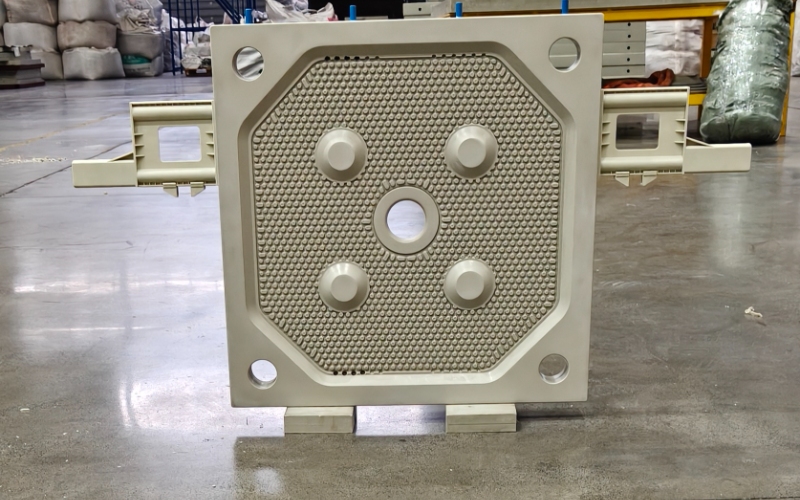
Final Cake Moisture and Quality
The final cake moisture and quality represent critical performance indicators in the recessed filter plate vs membrane filter plate debate. Membrane filter plates consistently produce drier cakes, which translates to higher separation efficiency and better purity. This feature becomes essential in industries with strict purity requirements, such as pharmaceuticals and food processing.
Membrane filter plates achieve superior dryness, which enhances the purity of the filtrate and the cake. This improvement supports high-value applications where product quality and purity cannot be compromised. The ordinary chamber filter press, using a recessed filter plate, produces cakes with higher moisture content. While this result may suffice for general industry, it does not meet the highest standards for separation efficiency or purity.
Operators report that both plate types can face challenges with sticky cakes. However, the enhanced squeezing action of the membrane filter plate often reduces the need for manual intervention. This benefit increases overall filtration efficiency and reliability.
Filtration Rate and Cycle Time in Membrane Filter Press
Speed and Throughput Comparison
The membrane filter press stands out for its ability to deliver rapid filtration cycles. Operators see a significant reduction in cycle time compared to traditional chamber or recessed filter plates. The membrane filter press uses a two-stage process. First, the feed pump fills the chambers and begins dewatering. Next, the membrane inflates, applying uniform pressure to the filter cake. This action speeds up the release of liquid and shortens the overall cycle. Many industries choose the membrane filter press when they need high throughput and consistent results.
A faster cycle means more batches can be processed each day. The membrane filter press maintains a steady filtration rate, even with slurries that are difficult to dewater. This advantage helps companies meet production targets without sacrificing quality. The membrane filter press also reduces the risk of bottlenecks in busy plants.
Impact on Production Efficiency
Production efficiency depends on both speed and the quality of separation. The membrane filter press improves both. It enhances solid-liquid separation and reduces cycle times. This makes it ideal for high-pressure filtration tasks. In mining, the membrane filter press optimizes dewatering of slurries and lowers moisture content in the filter cake. This improvement boosts process efficiency and reduces waste.
The following table shows how different filter plate types affect production efficiency in various industries:
Filter Plate Type | Impact on Production Efficiency |
|---|---|
Membrane Filter Plates | Enhance solid-liquid separation and reduce cycle times, ideal for high-pressure filtration. |
Chamber Filter Plates | Offer exceptional cake washing and drying capabilities, suitable for thorough cake treatment. |
Recessed Chamber Plates | Widely used in pharmaceuticals for high-purity product separation, ensuring minimal product loss. |
Membrane Filter Plates (Mining) | Optimize dewatering of slurries and reduce moisture content in filter cake, enhancing process efficiency. |
The membrane filter press supports industries that require reliable, high-speed filtration. It helps companies achieve better resource utilization and lower operational costs. The membrane filter press remains a top choice for those who value both speed and quality in their filtration process.
Choosing Between Recessed Filter Plate and Membrane Filter Plate
Cost-Effective Solutions with Chamber/Recessed Filter Plate from XUDA Filtration
Many industries prioritize cost when selecting a filter plate. The recessed filter plate from XUDA Filtration offers a practical solution for companies seeking cost-effectiveness without sacrificing performance. These plates fit seamlessly into existing systems, eliminating the need for expensive frame modifications. Customization ensures each filter plate matches the process requirements, which simplifies installation and reordering.
Feature | Benefit |
|---|---|
Tailor-made Filter Plates | Designed for a perfect fit without costly frame modifications. |
Enhanced Performance | Custom solutions guarantee seamless installation and easy reordering. |
Cost Efficiency | Suitable for cost-sensitive applications across various industries. |
Price sensitivity remains high in sectors such as mining and chemical manufacturing. Manufacturers continue to balance advanced technology with affordability. The recessed filter plate supports high filtration efficiency and reliable operation, making it a preferred choice for users who value cost and purity.
High-Performance Dewatering with Membrane Filter Plate
Some industries require maximum dryness and purity in their filtration process. The membrane filter plate delivers high-performance dewatering, especially in challenging environments. Municipal wastewater treatment plants have used these plates to increase cake dryness from 18% to 27% solids, which reduces waste volume and disposal costs. Food processing facilities report improved filtrate quality and lower operational expenses due to greater efficiency.
Case Study Description | Key Outcomes |
|---|---|
Municipal wastewater treatment plant using plate and frame presses for biosolids management | Reduced waste volume, lower disposal costs, increased cake dryness from 18% to 27% solids |
Food processing facility utilizing plate and frame presses for sludge management | Improved filtrate quality, reduced operational expenses due to efficiency gains |
Pilot study on adaptability of plate and frame presses | Demonstrated flexibility in handling different sludge types with minor adjustments |
The membrane filter plate excels in applications where purity and high filtration standards are critical. Its adaptability allows operators to handle different sludge types with minimal changes, supporting consistent results and operational excellence.
NEED A SAMPLE OR AN OFFICIAL QUOTE?
Contact inquiry@xudaenviro-tech.com for more details.


Related Application