What to Consider When Buying Filter Plates.
Buying filter plates involves more than price and material. Plates must fit the filter press, suit operating conditions, meet filtration needs, and satisfy quality requirements. Poor selection can cause leakage, installation issues, reduced dewatering performance, premature wear, and downtime. This guide covers key checks before requesting quotes and placing orders.
1. Define the Application Before Selecting a Plate
Start with the process rather than the product catalogue. The right choice depends on the slurry, the required cake condition, the filtration cycle, the existing press configuration, and the operating environment. Material compatibility is essential, but it does not by itself establish that a plate is suitable.
1.1 Check the plate material
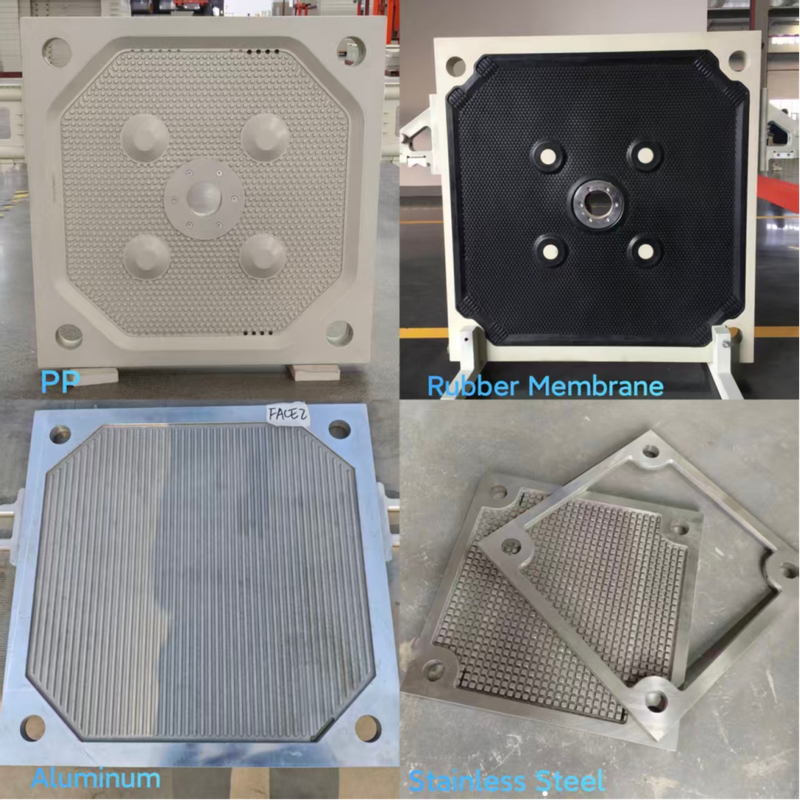
Filter plates may be manufactured from polypropylene (PP), polyethylene (PE), metals, or other material systems depending on the plate design and supplier’s product range. Confirm that the proposed material is available for the required plate type and is suitable for the actual chemical composition, concentration, temperature, pressure, and cleaning conditions.
| Material | General characteristics | Purchasing checks |
| Polypropylene (PP) | Resistant to many acids and alkalis; limited compatibility with strong oxidizers and solvents. | Confirm chemical compatibility, operating conditions, plate design, and UV resistance for outdoor use or storage. |
| Polyethylene (PE) | Chemical resistance and mechanical performance depend on the grade and operating conditions. | Confirm the exact grade, temperature limits, chemical compatibility, and whether it is offered for the required plate design. |
| Aluminum | Suitable for selected applications; limited corrosion resistance in strong acids and alkalis. | Check slurry chemistry, pH, temperature, and any protective coating. Do not select by pH alone. |
| Stainless steel | Corrosion resistance depends on steel grade and operating conditions. | Specify the steel grade and check chemicals, temperature, and cleaning conditions. |
| Rubber / elastomer components | Resistance depends on the compound; elastomers are commonly used in membranes and seals. | Identify the compound and check chemical compatibility, temperature, and pressure limits. |
1.2 Select the plate design for the process objective
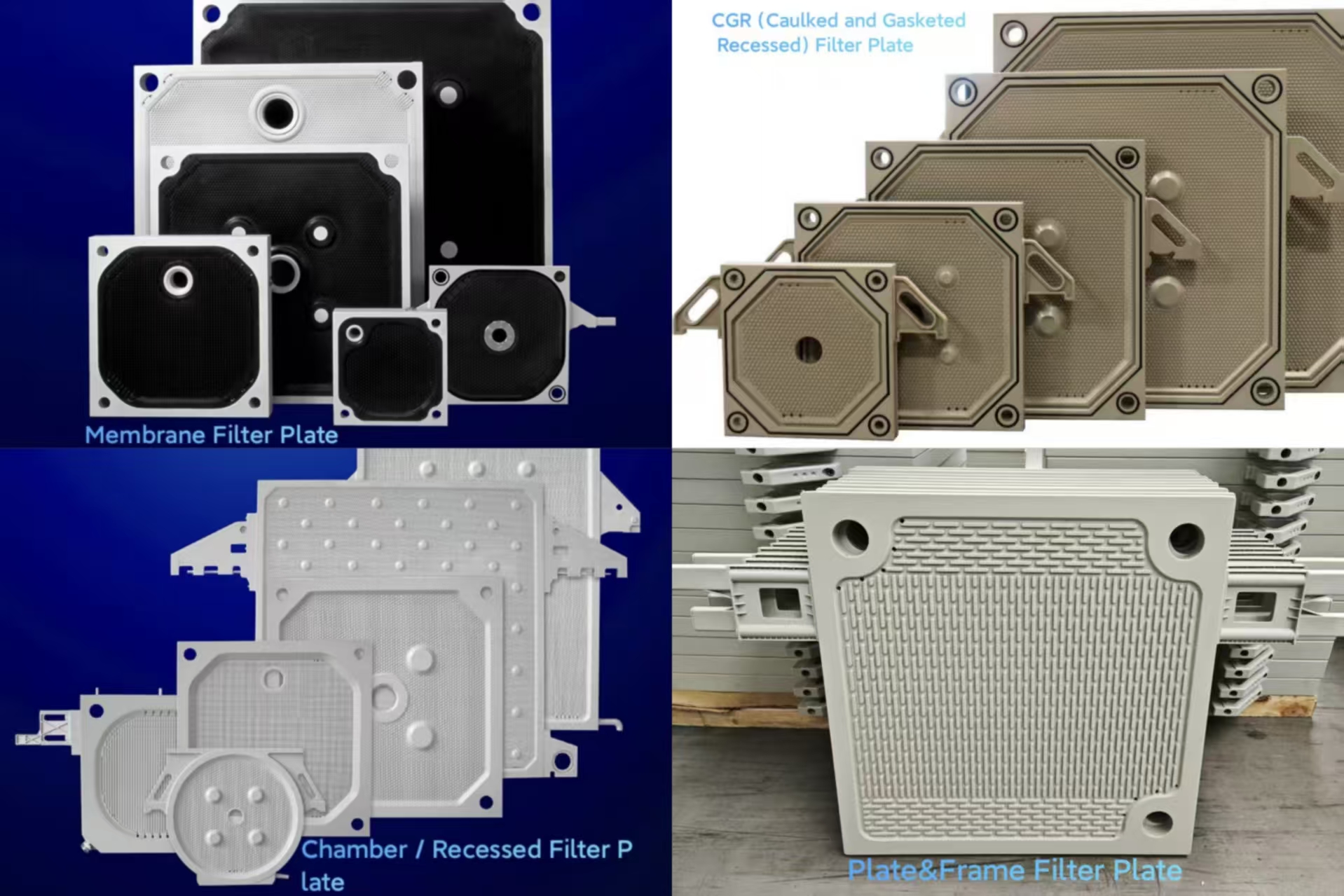
Different plate designs serve different filtration requirements. The following descriptions are starting points for selection, not substitutes for checking the press design and process data.
| Plate type | Typical use / purpose | Key points to confirm |
| Chamber / recessed plate | Pressure filtration and dewatering of sludge, mineral tailings, and industrial slurries. | Chamber depth, cake thickness, feed arrangement, pressure, and press compatibility. |
| Membrane plate | Additional squeezing to reduce cake moisture or shorten filtration cycles. | Membrane material, squeezing medium and pressure, operating sequence, and press compatibility. |
| Plate-and-frame design | Applications requiring separate plates and frames or specific filter media arrangements. | Frame dimensions, chamber space, filter media, sealing, and press configuration. |
| CGR / gasketed recessed plate | Applications requiring gasketed sealing to reduce external leakage. | Frame dimensions, chamber space, filter media, sealing, and press configuration. |
1.3 Match the plate type to the application objective
| Process objective | Selection questions |
| General sludge or slurry dewatering | Can a chamber plate meet throughput and cake requirements? What chamber depth and filtration area are needed? |
| Lower cake moisture | Is membrane squeezing suitable? What squeezing pressure and medium does the press support? |
| Specific filter-media or process configuration | Is a plate-and-frame design or specific media replacement method required? |
| Improved leakage control | Is a gasketed plate needed? Are the gasket material and sealing design compatible with the chemicals and press? |
| Corrosive or high-temperature service | Can all wetted and sealing materials withstand the chemicals and operating temperature? |
2. Confirm Dimensions and Compatibility with the Filter Press
Replacement plates must match the existing press in dimensions, hole positions, handles, and outlets to ensure proper installation and sealing. Verify all specifications against approved drawings or existing plates before production.
2.1 Dimensions and Chamber Depth
·Overall Dimensions: Confirm plate length, width, and tolerances.
·Plate Thickness and Chamber Depth: Verify both for the specific plate design.
·Filtration Area and Chamber Volume: Check capacity requirements and cake thickness.
·Plate-Pack Dimensions: Ensure compatibility with the press opening and closing system.
Common nominal sizes include 500 × 500, 630 × 630, 800 × 800, 1000 × 1000, 1250 × 1250, 1500 × 1500, and 2000 × 2000 mm. Actual dimensions must be confirmed against the existing equipment.
2.2 Feed Holes, Outlets, and Plate Arrangement
·Feed Configuration: Confirm center-feed or corner-feed type, hole diameter, and position.
·Internal Feed Channels: Check slurry distribution through the plate pack.
·Filtrate Outlets: Verify positions, dimensions, and open or closed discharge arrangements.
·Handles and Suspension: Confirm handle dimensions, spacing, and plate-shifting compatibility.
·Filter Cloth Fit: Check cloth dimensions, attachment method, feed openings, and outlet arrangement.
Before ordering, provide the press model, original drawings, or measured photographs. Always confirm the final technical drawing before production.
2.3 Verify pressure and operating limits
Confirm the plate’s rated operating pressure and the press’s actual operating conditions. For membrane plates, separately verify the permitted squeezing pressure and the requirements of the squeezing system. The plate, membrane, seals, feed system, and press must be suitable as a complete operating system. Do not assume that a plate is suitable simply because its dimensions match.

3. Evaluate Filter Plate Quality and Agree on Acceptance Criteria
Inspect dimensional accuracy, sealing surfaces, drainage features, outlets, and overall structural condition. Visual checks alone cannot replace measurements against approved drawings. Confirm inspection requirements and acceptance criteria with the supplier before production.
3.1 Dimensional Inspection
·Measure key dimensions: length, width, thickness, chamber depth, hole positions, and outlet dimensions.
·Verify measurements against approved drawings and tolerances.
·Request inspection records for critical dimensions when specified.
3.2 Sealing Surfaces and Plate Condition
·Check for deformation, cracks, chips, pits, burrs, and uneven contact surfaces.
·Inspect feed holes, corners, and other stress-prone areas for visible defects.
·Verify sealing geometry matches the approved design and adjacent plates.
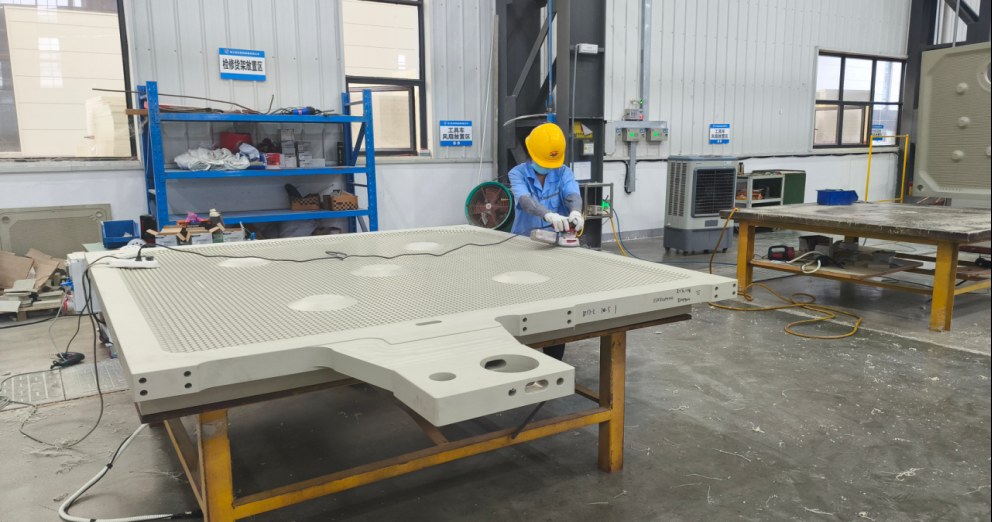
3.3 Drainage Grooves and Filter-Cloth Support
·Check drainage grooves for continuity and conformity with the plate design.
·Inspect for blockages, deformation, irregular sections, burrs, and rough edges.
·Ensure drainage points and groove patterns support the filter cloth without causing damage or restricting flow.
3.4 Filtrate Outlets and Documentation
·Verify outlet positions, dimensions, edge quality, and internal flow paths against approved drawings.
·Confirm required documents, including material identification, dimensional inspection reports, and pressure-test records.
·Specify test methods and acceptance limits for each plate design rather than applying generic values.
A clear purchase specification should define inspection items, measurement methods, required documents, and procedures for handling non-conforming products.
4. Assess Filtration Performance and Total Operating Cost
The lowest purchase price does not always represent the lowest cost over the service life of a filter plate. When comparing quotations, consider whether the proposed plate can meet the process target and how it may affect maintenance, replacement frequency, and production continuity.
| Factor | Why it matters | What to ask the supplier |
| Cake moisture | Affects downstream handling, drying, transport, and disposal costs. | Is the plate type suitable for the slurry and required cake condition? Is membrane squeezing applicable? |
| Filtration cycle time | Determines batch frequency and production capacity. | What process data is needed to estimate cycle time? Are the assumptions clearly stated? |
| Filtration area and capacity | Determines the slurry volume processed per cycle. | Does the plate configuration meet the required filtration area and chamber volume? |
| Service life and wear | Affects replacement costs and unplanned downtime. | How do operating conditions affect service life? What maintenance and inspection practices are recommended? |
| Maintenance and downtime | Unexpected plate replacement or leakage can interrupt production. | Are replacement parts, technical support, and troubleshooting services available? |
5. Evaluate the Filter Plate Manufacturer
A reliable manufacturer should demonstrate the ability to meet equipment and process requirements. When comparing suppliers, consider the following:
| Evaluation area | Questions to ask |
| Manufacturing capability | Can the supplier produce the required plate type, dimensions, and configuration? |
| Customization and replacement support | Can the supplier manufacture plates based on drawings, samples, or measured specifications? |
| Delivery and packaging | Can it confirm lead times, packaging standards, and shipment protection? |
| After-sales service | Are warranty coverage, technical support, and corrective actions available? |
Conclusion
Choosing the right filter plate requires evaluating application suitability, material compatibility, equipment dimensions, and operating conditions to ensure reliable performance and minimize downtime. XUDA Filtration can review your filter press model, plate specifications, drawings, and slurry parameters to assess compatibility and recommend a suitable solution before production.
NEED A SAMPLE OR AN OFFICIAL QUOTE?
Contact inquiry@xudaenviro-tech.com for more details.


Related Application